
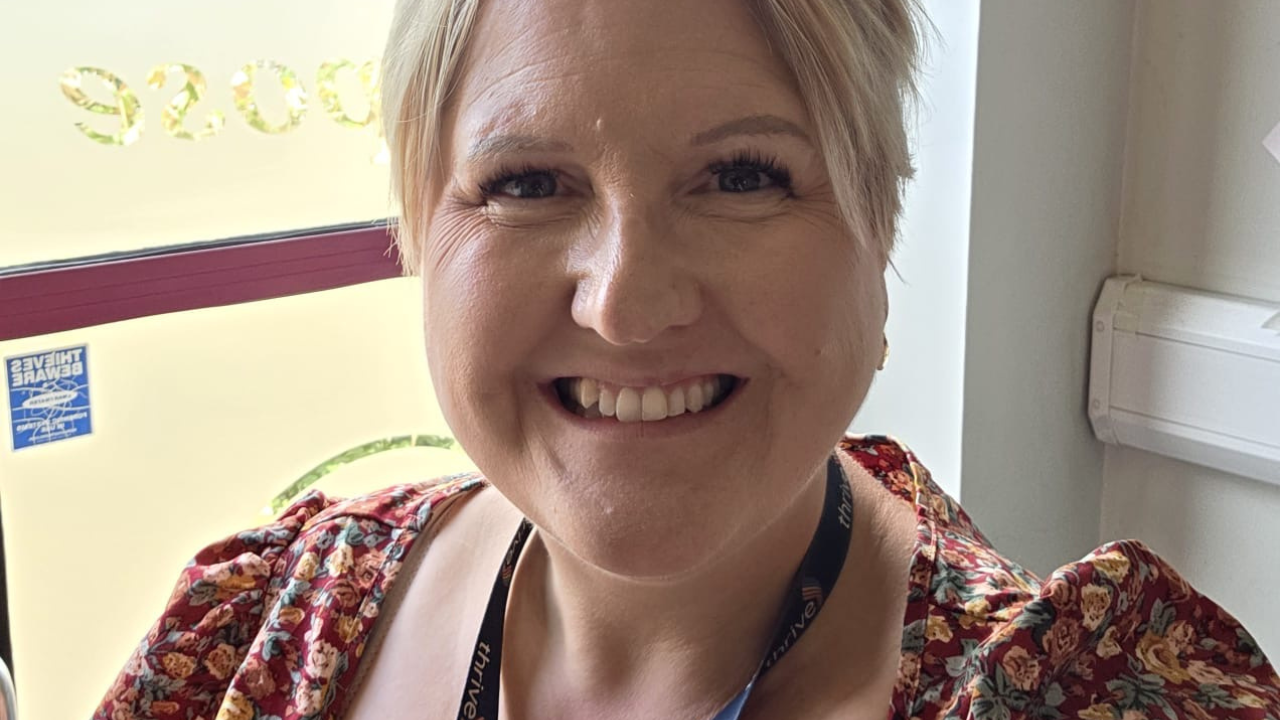
The Myth of the Unshakeable Leader
The Myth of the Unshakeable Leader
A blog by Becky
Sometimes, when you are a leader, you feel that you must be strong all of the time. That to show any form of emotion is a weakness. That your role is to reassure — to project calm, control, certainty — to give your team the feeling that everything is in hand and everything will be OK.
And those feelings are important to give to your team.
But here is what I have realised since becoming a headteacher.
Strength does not mean silence.
I have been in post for two years now. Before me, there were moments when panic was felt across the school. There is no blame in that — this job is incredibly hard. I will never join in with headteacher bashing. Unless you have sat in this seat, you do not understand the weight of it. We all want to do the most amazing job. Perception is not always reality.
What I strive to be is the swan — gliding around school, creating a sense of ease, even when underneath the water my feet are paddling furiously.
Right now, in my school, we are facing significant challenges. There is a great deal of dysregulation. Anxiety is high. Tension is heightened. When that call comes through on the walkie-talkie, my body reacts too. Fight or flight. Every single time.
And yet I walk into the room calm.
Because that calm matters.
But here is the truth: just because you are the leader does not mean you do not feel the overwhelm your team feels. If you continue trying to be strong in a robotic, impenetrable way, you will only feel more alone. And that is a fast track to burnout.
I firmly believe that vulnerability is essential in leadership — but it must be handled with care. Being vulnerable does not mean signalling that the wheels are falling off. It means being real. Naming the feeling. Sharing how you manage it.
In a recent teaching assistant meeting, we spoke about anxiety — how we recognise it, how it shows up. I shared that I know I have reached my limit when I cry. When it all becomes too much, the floodgates open. I cannot stop it. And I have learned that for me, crying is release. It allows me to move forward.
Some people see crying as weakness. I don’t. I see it as regulation.
After that meeting, a TA came to me and said, “It made me feel so much better knowing that you cry too. When you said that, I realised you feel the same as we do sometimes.”
In that moment, I realised something important.
We are all humans doing hard things together.
Yes, it is my responsibility to lead strategically, to make decisions, to carry accountability. But it is also my responsibility to create space for humanity — for my team and for myself.
And yet, even believing this, I still struggle.
Recently, after weeks of pressure, something small tipped me over the edge. The straw that broke the camel’s back. I cried in my office. Proper tears. The kind that come from accumulated strain.
When I returned to the corridors, red-faced and puffy-eyed, people asked, “Are you OK?”
And I said what so many of us say.
“Yeah. I’m fine.”
But I wasn’t.
What I should have said was, “It’s been really tough this week. I’ve just had a bit of a release. It’s Friday. I’m tired. But everything is okay.”
Because that would have modelled something healthier.
It would have shown:
Yes, this is hard.
Yes, I feel it too.
And yes, we are still steady.
Leadership vulnerability is not about emotional dumping. It is not about walking around crying or expressing anger unchecked. It is about emotional honesty with regulation. It is about repair when needed. It is about showing that feeling deeply and leading effectively are not mutually exclusive.
I am fortunate to work alongside a fantastic assistant head who will one day make an exceptional headteacher. Recently, she shared that she is afraid to show vulnerability. She feels she must appear constantly strong and in control.
I had already noticed.
When she first allowed herself to show emotion in front of me, I felt relieved — not worried. Because carrying that armour all the time is exhausting. And lonely.
I told her what I believe.